
Creating a Greener Home with Sustainable Hardwood and Modern Carpet Solutions
Choosing new flooring for your home used to be a decision based almost entirely on aesthetics and price. You looked for a color that matched your furniture and a price point that fit your budget, often without much thought toward the origin of the materials or the long-term impact on your indoor environment.
Today, a beautiful home is also a healthy and responsible one. Fortunately, the flooring industry has undergone a massive transformation, introducing eco-friendly advancements in hardwood and carpet that don’t require you to sacrifice style for ethics. This guide explores how modern manufacturing and responsible sourcing are redefining what it means to have sustainable surfaces in your home.
Defining Sustainability in Modern Flooring
When you hear the term sustainable flooring, it is easy to think only of recycled materials. While recycling is a significant part of it, modern sustainability is a much broader concept that encompasses the entire lifecycle of the product. It starts with how raw materials are harvested, moves through how the flooring is manufactured and ends with how it affects the air quality inside your home. For a surface to be truly eco-friendly in 2026, it must be produced using methods that protect forest ecosystems or utilize rapidly renewable resources, all while minimizing the carbon footprint of the factory.
Advancements in manufacturing have made it possible to track the journey of a floor from the forest floor to your living room. The focus has also shifted toward longevity. A floor that lasts for thirty or forty years is inherently more sustainable than one that needs to be replaced every decade. By choosing high-quality, durable materials, you are reducing waste and ensuring that the resources used to create your floor are maximized to their fullest potential.
The Evolution of Responsibly Sourced Hardwood

Hardwood has long been the gold standard for home flooring, prized for its timeless beauty and incredible durability. In the past, concerns about deforestation made some homeowners hesitant to choose natural wood. However, modern hardwood production has become one of the most environmentally conscious sectors. Today’s premium hardwood collections focus heavily on certified responsible forestry, ensuring that for every tree harvested, more are planted.
Beyond just how the wood is grown, the way it is processed has also seen significant eco-friendly upgrades. Many manufacturers now use every part of the log, significantly reducing waste during production. Even the sawdust generated during milling is often repurposed to provide carbon-neutral energy for the manufacturing facilities.
One of the most effective ways to make hardwood more sustainable is to reduce the distance it travels. In 2026, there is a strong emphasis on domestic sourcing.
- Reduced Carbon Emissions: Choosing wood species harvested closer to home significantly lowers the fuel required for transport.
- Support for Local Ecosystems: Domestic forestry is subject to some of the strictest environmental regulations in the world, ensuring better protection for soil and water quality.
- Regional Relevance: Locally sourced oaks, maples and hickories are naturally adapted to the climate.
Engineering a Greener Future for Wood Floors
While solid hardwood remains a classic, engineered hardwood has become a powerhouse of sustainability. Engineered construction uses a thin layer of premium hardwood on top of a core made from faster-growing, more abundant wood species. This allows manufacturers to get up to ten times more flooring out of a single slow-growing tree like White Oak or Walnut compared to solid planks. This efficiency is a gamechanger for the environment, allowing you to enjoy the luxury of exotic or high-demand wood species with a much smaller ecological footprint.
The cores of these planks are also becoming more eco-friendly. Many now use advanced composite materials or high-density fiberboards made from recycled wood fibers. This ensures that no part of the timber goes to waste.
Eco Friendly Innovations in Modern Carpet
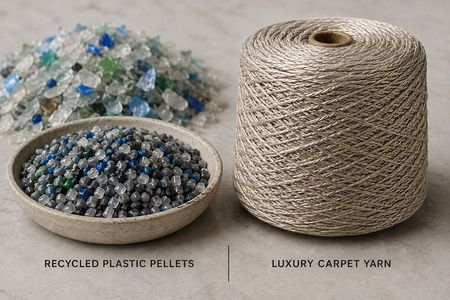
Carpet has seen some of the most impressive technological leaps in sustainability over the last few years. If you haven’t shopped for carpet recently, you might be surprised to learn that many modern options are crafted from recycled materials, such as reclaimed fishing nets or plastic bottles diverted from oceans and landfills. These recycled fibers are transformed into high-performance yarns that are incredibly soft, durable and stain-resistant.
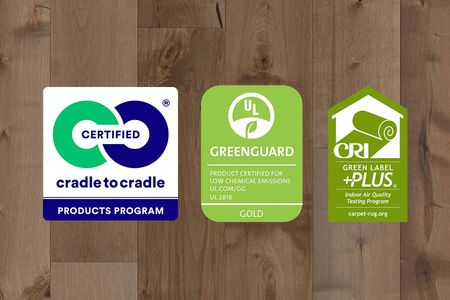
In addition to recycled content, the ‘cradle-to-cradle’ philosophy has become a hallmark of premium carpet brands. This means the carpet is designed with its eventual replacement in mind. When the time comes to update your floors, many of these products can be fully recycled back into new carpet fiber rather than ending up in a landfill.
Bio Based Fibers and Natural Materials
For homeowners who prefer natural textiles, there is a growing movement toward bio-based carpet fibers.
- Corn and Sugar Derivatives: Some modern carpets use polymers derived from rapidly renewable plants rather than petroleum-based chemicals.
- Natural Wool: Wool remains a premier sustainable choice as it is biodegradable, renewable and naturally flame-resistant.
- Renewable Backings: Eco-friendly carpets often feature backings made from natural jute or recycled materials.
Improving Indoor Air Quality with Low VOC Surfaces
One of the most important advancements in modern flooring is the move toward Low-VOC (Volatile Organic Compound) materials. VOCs are chemicals that can off gas into your home, potentially affecting air quality and respiratory health. Today’s leading hardwood finishes and carpet adhesives are formulated to meet rigorous indoor air quality standards, ensuring that your new floors are safe for children, pets and everyone in your household.
In hardwood, this often means using water-based finishes or UV-cured oils that provide incredible protection without the harsh odors of traditional solvent-based products. In the carpet world, advanced manufacturing processes have virtually eliminated the new carpet smell that was once a standard part of installation.
Long Term Durability as a Sustainable Choice
It is important to remember that the most sustainable product you can buy is the one you won’t have to replace for a long time. High-performance finishes on hardwood and advanced fiber treatments on carpet have extended the lifespan of these materials significantly. Modern hardwood is now finished with layers of aluminum oxide or ceramic beads that protect against scratches and wear, while new carpet technologies prevent crushing and matting even in high-traffic hallways.
A durable floor stays out of the waste stream and reduces the need for the energy and resources required to manufacture, ship and install a replacement. This ‘buy once, buy well’ mentality is a core pillar of sustainable living in 2026. Choosing a surface that can handle the rigors of a busy household, is the ultimate way to be an environmentally conscious homeowner.
Choosing Your Sustainable Surface with Confidence
As you plan your next home update, incorporating sustainable surfaces allows you to create a space that reflects your values without compromising on the high-end design you desire. By focusing on materials that prioritize indoor air quality, resource efficiency and long-term durability, you are ensuring that your home remains a beautiful, healthy sanctuary.
At Flooring By Designin Grand Rapids, MI, we’ll help you explore these eco-friendly advancements and choose the right sustainable flooring for your home. We are dedicated to helping you navigate the latest trends in green technology, ensuring your new floors are a perfect match for your lifestyle and your environmental goals.